

Lymphedema: An Old Foe, A New Perspective on Prevention and Treatment
Lymphedema is a chronic condition characterized by fluid retention and swelling due to impaired lymphatic drainage. It frequently develops after cancer treatments, particularly breast cancer surgery and radiation therapy involving the axillary lymph nodes. This summary explores the risks, prevention strategies, emerging surgical alternatives, practical guidelines, and historical perspectives on lymphedema.
Historical Perspective
Lymphedema has been described in medical literature for centuries, but its modern understanding began in the 19th century. Rudolf Virchow was one of the first physicians to distinguish lymphedema from other types of edema. In the mid-20th century, post-mastectomy lymphedema became a recognized complication, leading to the development of conservative treatments such as manual lymphatic drainage and compression therapy. The evolution of surgical techniques in the late 20th and early 21st centuries has introduced newer options aimed at preventing or mitigating lymphedema in high-risk patients.
Risks of Lymphedema
Lymphedema risk factors include lymph node dissection, radiation therapy, obesity, infection, and trauma to the affected limb. The severity of risk varies among patients, with those undergoing extensive axillary node dissection and radiation having the highest likelihood of developing the condition. Traditionally, patients were advised to avoid venipuncture, blood pressure measurements, and even air travel on the at-risk limb to prevent complications. However, contemporary research has not found strong evidence supporting the necessity of these strict restrictions. Instead, a more balanced approach is recommended.
Prevention and Practical Guidelines
Preventing lymphedema focuses on maintaining lymphatic flow and reducing excessive strain on the affected limb. While compression garments are often recommended, there is no definitive data proving that wearing them prevents the onset of lymphedema. However, they can be beneficial in managing existing symptoms. Similarly, avoiding minor injuries, infections, and overuse of the limb remains prudent. One controversial topic is whether venipuncture and blood pressure measurements should be strictly avoided on the affected side. While it is generally advised to use the contralateral limb when possible, studies suggest that, if necessary, these procedures can be safely performed without significantly increasing lymphedema risk. For air travel, previous recommendations advised compression sleeves due to concerns over cabin pressure changes exacerbating swelling. However, recent studies indicate that flying without compression may not increase lymphedema risk if the limb is otherwise healthy. Staying hydrated and performing light movement during flights may help mitigate any potential issues.
Lymphosome Concept and Lymphatic Self-Regeneration
The lymphosome concept describes functional lymphatic territories in the body and how they interact. Recent research suggests that enhancing lymphatic function through physical therapy and complex decongestive therapy (CDT) may help develop alternative drainage pathways, potentially reducing lymphedema risk. Lymphatic self-regeneration remains an area of active investigation. While some minor lymphatic vessels can regenerate after injury, significant damage—such as from lymph node removal—limits natural recovery. Experimental approaches, including VEGF-C therapy and surgical lymph node transfer, aim to stimulate lymphangiogenesis, but clinical applications remain in early stages.
Surgical Advances: ARM Procedure and Lymphovascular Bypass
Newer surgical techniques have emerged to reduce the incidence of lymphedema in patients undergoing breast cancer treatment. Two promising procedures include:
Axillary Reverse Mapping (ARM): This technique identifies and preserves lymphatic pathways that drain the arm during lymph node dissection. By sparing these lymphatics, the risk of post-surgical lymphedema may be reduced. ARM is particularly useful in patients requiring axillary lymph node dissection but still carries some risk if cancerous lymph nodes are involved.
Lymphaticovenous Bypass (LVB): This microsurgical procedure involves connecting damaged lymphatic vessels to nearby veins, allowing excess lymphatic fluid to drain into the venous system. Studies suggest that LVB can significantly reduce the development of lymphedema when performed as a preventative measure during breast cancer surgery or as a treatment for early-stage lymphedema.Both ARM and LVB are promising but not yet standard procedures for all patients. Their effectiveness depends on individual factors, such as the extent of cancer involvement and the patient’s lymphatic anatomy.
Practical Guidelines for Lymphedema Prevention and Management
To provide patients with reassurance and a balanced approach, the following guidelines reflect current evidence:
1- Venipuncture and Blood Pressure Measurements: Avoid on the affected limb when possible. However, if necessary, they can be performed safely without significant risk of lymphedema. Patients should not panic if these procedures are unavoidable.
2- Air Travel: Compression sleeves are optional. If used, they should be well-fitted to avoid constriction. Staying hydrated and performing light arm movements can help maintain circulation.
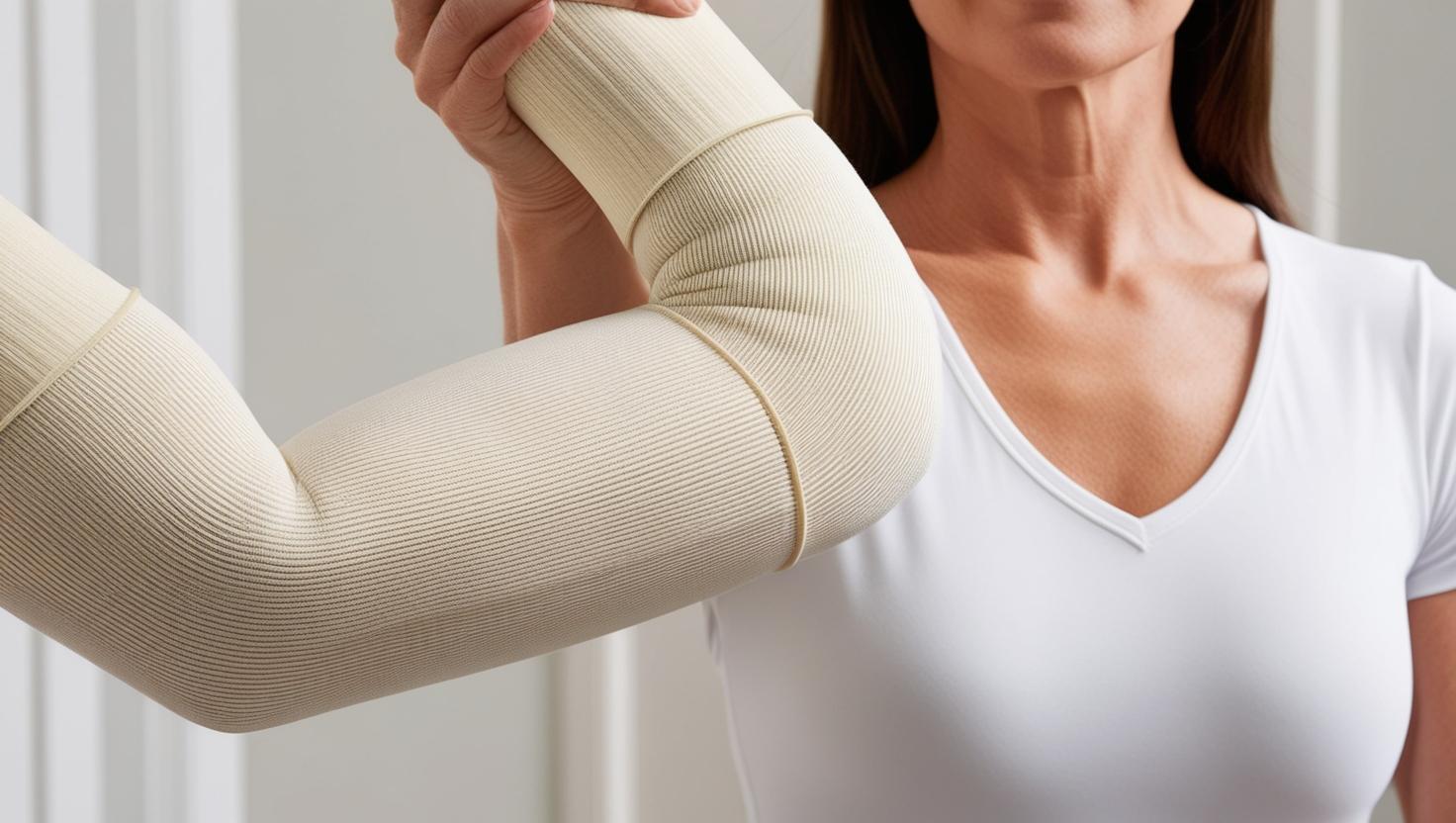
3- Compression Therapy: While no conclusive evidence supports its role in preventing lymphedema, compression may be beneficial for symptom management or high-risk individuals.
4- Exercise and Physical Activity: Regular movement, strength training, and stretching can help maintain lymphatic function without increasing risk. Patients should gradually increase intensity under supervision.
5- Skin Care and Infection Prevention: Minimize skin injuries by moisturizing, using gloves for household work, and promptly treating any wounds to prevent cellulitis.
6- Surgical Options: Patients undergoing breast cancer treatment should discuss newer surgical techniques such as ARM and LVB with their medical team to determine if they are candidates for these preventive strategies.
7- Psychological Reassurance: While lymphedema remains a concern, strict avoidance of routine activities is unnecessary. Patients should be encouraged to live normally while taking reasonable precautions.
Conclusion
Lymphedema remains a significant concern after breast cancer treatment, but evolving evidence suggests that excessive restrictions may not be necessary. While traditional guidelines advised strict avoidance of venipuncture, blood pressure measurements, and air travel on the affected limb, recent research indicates that these activities are not inherently dangerous. Surgical advances such as ARM and LVB offer promising preventive options, while emerging concepts like the lymphosome model and lymphatic self-regeneration may further refine future treatment approaches. A balanced, evidence-based strategy focusing on education, reassurance, and personalized care will provide the best outcomes for patients.
References
1. Husted Madsen A, Haugaard K, Soerensen J, Bokmand S, Friis E, Holtveg H, Peter Garne J, Horby J, Christiansen P. Arm morbidity following sentinel lymph node biopsy or axillary lymph node dissection: a study from the Danish Breast Cancer Cooperative Group. Breast. 2008 Apr;17(2):138-47. doi: 10.1016/j.breast.2007.08.006. Epub 2007 Oct 24. PMID: 17928226.
2. Kwan ML, Darbinian J, Schmitz KH, Citron R, Partee P, Kutner SE, Kushi LH. Risk factors for lymphedema in a prospective breast cancer survivorship study: the Pathways Study. Arch Surg. 2010 Nov;145(11):1055-63. doi: 10.1001/archsurg.2010.231. PMID: 21079093; PMCID: PMC2997775.
3. Ferguson CM, Swaroop MN, Horick N, Skolny MN, Miller CL, Jammallo LS, Brunelle C, O'Toole JA, Salama L, Specht MC, Taghian AG. Impact of Ipsilateral Blood Draws, Injections, Blood Pressure Measurements, and Air Travel on the Risk of Lymphedema for Patients Treated for Breast Cancer. J Clin Oncol. 2016 Mar 1;34(7):691-8. doi: 10.1200/JCO.2015.61.5948. Epub 2015 Dec 7. PMID: 26644530; PMCID: PMC4872021.
4. Ahmed M, Rubio IT, Kovacs T, Klimberg VS, Douek M. Systematic review of axillary reverse mapping in breast cancer. Br J Surg. 2016 Feb;103(3):170-8. doi: 10.1002/bjs.10041. Epub 2015 Dec 10. PMID: 26661686.
5. Asdourian MS, Skolny MN, Brunelle C, Seward CE, Salama L, Taghian AG. Precautions for breast cancer-related lymphoedema: risk from air travel, ipsilateral arm blood pressure measurements, skin puncture, extreme temperatures, and cellulitis. Lancet Oncol. 2016 Sep;17(9):e392-405. doi: 10.1016/S1470-2045(16)30204-2. Epub 2016 Aug 30. PMID: 27599144.
6. Suami H, Scaglioni MF. Anatomy of the Lymphatic System and the Lymphosome Concept with Reference to Lymphedema. Semin Plast Surg. 2018 Feb;32(1):5-11. doi: 10.1055/s-0038-1635118. Epub 2018 Apr 9. PMID: 29636647; PMCID: PMC5891651.
7. Granoff MD, Pardo JA, Johnson AR, Fleishman A, Tillotson E, Thomson S, Lee BT, Singhal D. Superficial and Functional Lymphatic Anatomy of the Upper Extremity. Plast Reconstr Surg. 2022 Oct 1;150(4):900-907. doi: 10.1097/PRS.0000000000009555. Epub 2022 Aug 4. PMID: 35939638; PMCID: PMC9674086.
8. Donahue PMC, MacKenzie A, Filipovic A, Koelmeyer L. Advances in the prevention and treatment of breast cancer-related lymphedema. Breast Cancer Res Treat. 2023 Jul;200(1):1-14. doi: 10.1007/s10549-023-06947-7. Epub 2023 Apr 27. PMID: 37103598; PMCID: PMC10224871.
9. Schwarz GS, Grobmyer SR, Djohan RS, Cakmakoglu C, Bernard SL, Radford D, Al-Hilli Z, Knackstedt R, Djohan M, Valente SA. Axillary reverse mapping and lymphaticovenous bypass: Lymphedema prevention through enhanced lymphatic visualization and restoration of flow. J Surg Oncol. 2019 Aug;120(2):160-167. doi: 10.1002/jso.25513. Epub 2019 May 29. PMID: 31144329.