The Survivorship Pyramid
The journey of a breast cancer patient is long and challenging. After completing a series of treatments—surgery, chemotherapy, and radiation therapy—the acute phase of the battle is over. Thankfully, most patients today, especially those diagnosed at an early stage, can be cured.Still, in the majority of breast cancer cases, we cannot pinpoint a single cause for the development of the cancer. While you may have heard of BRCA1 and BRCA2—genetic mutations linked to breast and ovarian cancers—these germline mutations, which are inherited from your mother or father, account for only about 10% of cases.The rest? They arise from somatic mutations—genetic changes acquired over the course of life. These mutations can result from environmental exposures such as radiation, smoking, alcohol use, or poor diet. Aging also plays a role; as we grow older, our immune system becomes less efficient at eliminating cells with damaged DNA. This decline in surveillance allows abnormal cells to slip through the cracks.So what happens after cancer treatment? The cancer may be gone, but the environment that contributed to its development often remains unchanged. That’s why survivorship—the intentional work of staying healthy and preventing recurrence—is so important.
Where Do We Begin?
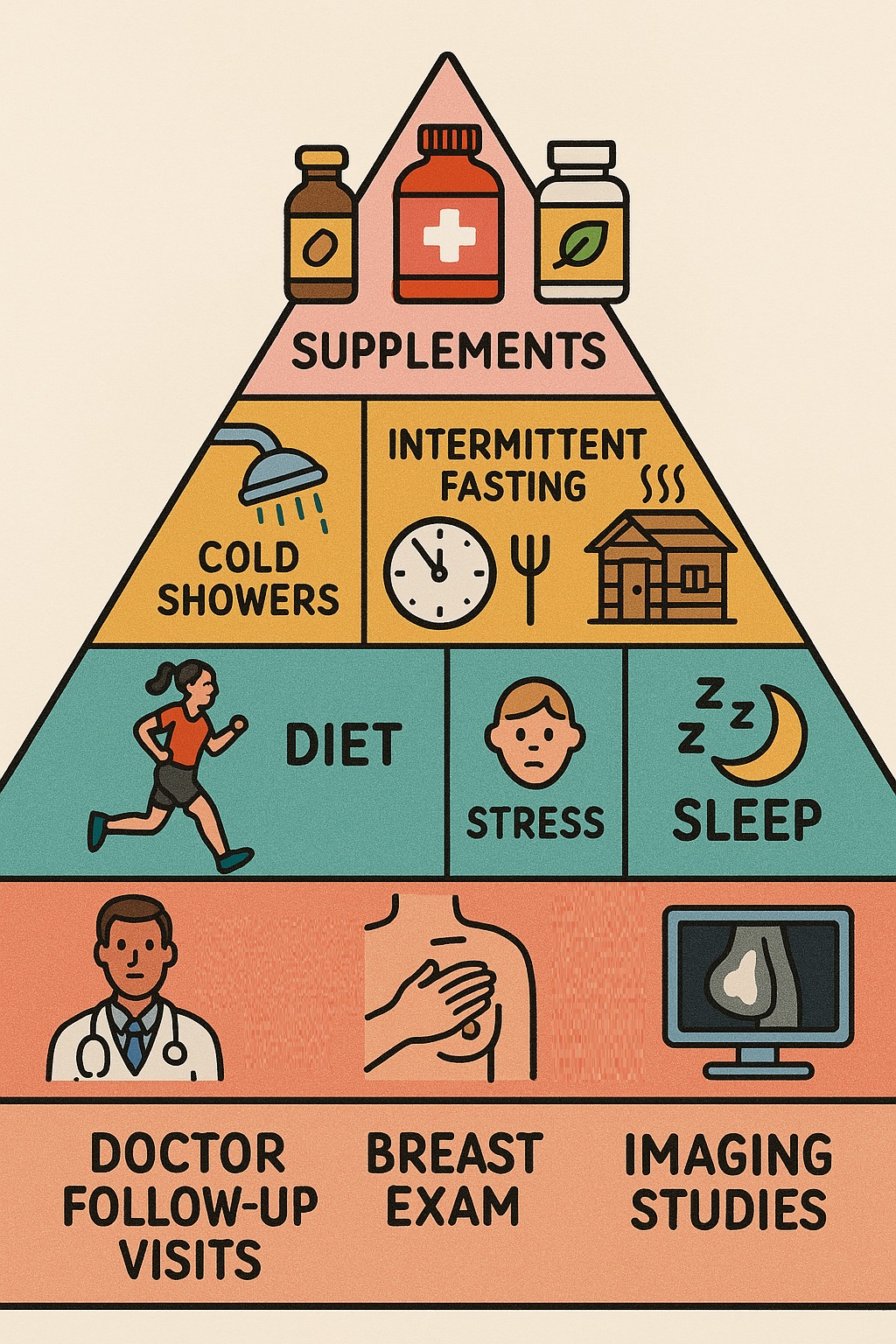
To make this path clearer, I developed a visual framework: The Survivorship Pyramid. Each tier represents a foundational element for lifelong health and recurrence prevention.The advent of endocrine therapy marked a major breakthrough in the treatment of hormone receptor-positive breast cancer. For patients whose tumors express estrogen or progesterone receptors, estrogen-blocking medications can significantly reduce the risk of recurrence.
1. The Foundation: Medical Follow-Up
At the base of the pyramid are the essentials. Your medical team is your anchor. Continue regular follow-ups with your oncologist and care team, including physical exams and imaging tailored to your case. Accountability and vigilance start here.
This tier (which includes exercise, diet, stress, and sleep) is just as important as the foundation. By embracing regular physical activity, you significantly reduce the risk of recurrence . Start simple: aim for 8,000 to 10,000 steps three times a week. That’s about three hours of moderate activity weekly—the minimum recommended by the American Medical Association, based on robust research. From there, build an exercise routine that works for you. Hate the gym? No problem. Prefer not to do cardio? Also fine. There are countless ways to stay active—find what brings you joy and stick to it.
2. Movement: The Power of Exercise
This tier is just as important as the foundation. By embracing regular physical activity, you significantly reduce the risk of recurrence. Start simple: aim for 8,000 to 10,000 steps three times a week. That’s about three hours of moderate activity weekly—the minimum recommended by the American Medical Association, based on robust research. From there, build an exercise routine that works for you. Hate the gym? No problem. Prefer not to do cardio? Also fine. There are countless ways to stay active—find what brings you joy and stick to it.
3. Nutrition: Fuel for Healing
I won’t endorse a trendy diet here. Instead, I’ll point to what the evidence tells us: a Mediterranean-style diet—with a daily caloric balance, low animal fat, and high amounts of olive oil, fish, vegetables, fruits, whole grains, and legumes—offers long-term protection and supports overall health. Avoid processed foods, fast food, and packaged snacks. Choose fresh, whole ingredients. Pair lean proteins or plant-based sources with colorful vegetables and healthy fats. There’s more to come in future newsletters.
4. Sleep & Stress Management: The Hidden Pillars
These two are tightly connected. Stress can rob you of sleep, and poor sleep can amplify stress. Both impact your immune system and slow your body’s ability to recover fully. Yes, life is demanding. We need to work, pay bills, and put food on the table—especially the nutritious kind we just discussed. But healing requires rest. It also requires space to process what you’ve been through. If you’re struggling to find your rhythm again, you’re not alone. Whether it’s anxiety, low energy, or simply feeling off—it’s okay to ask for help. Talk to a therapist, ideally someone trained in survivorship care. You don’t need to carry this alone. Tom Brady once said, when asked how he’d handle retirement: “I’ll need professional help. I’ll need a therapist.” If the greatest quarterback of all time isn’t afraid to get help, neither should you be. And don’t forget your sleep: aim for 7–8 hours each night to allow your immune system the time it needs to repair and regenerate.
5. The Bonus Tier: Hormesis
This level includes lifestyle practices that gently challenge the body to adapt and strengthen. Hormesis is the concept that small, controlled stressors can trigger powerful biological responses. Cold exposure (like cold showers), intermittent fasting, and sauna therapy are examples. When practiced correctly, they can activate your immune system and cellular repair processes.
6. The Tip of the Pyramid: Supplements
At the very top—like the cherry on the cake—are supplements. Are they essential? No. Not compared to everything we've already discussed. But some may offer additional support in recurrence prevention. We'll dive deeper into that in future issues.
A New Chapter
This is just the beginning of our Survivorship series. Together, we’ll explore each tier of the pyramid and build a sustainable, empowering lifestyle that supports healing and longevity.Thanks for reading. Let’s get to work—your best life is still ahead.